640,000 First-Time Voters May Determine 12 Knesset Seats in Tuesday Election
The Israel Democracy Institute projects that new 18- to 22-year-old citizens could swing the balance of power in the 120-member parliament.
By Hector Medina ·
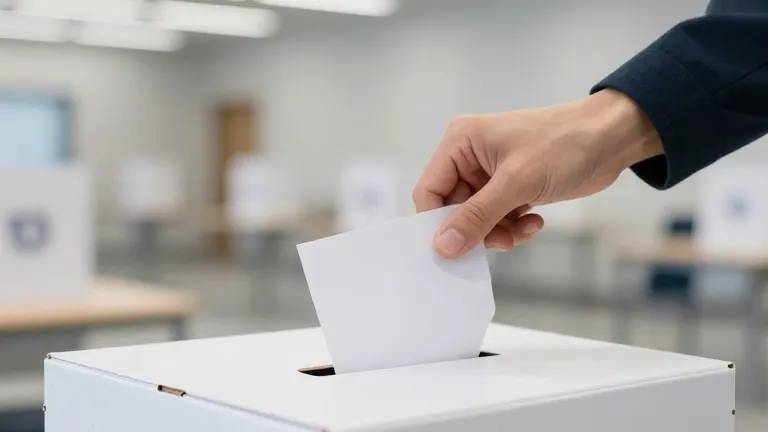
Israelis cast ballots on Tuesday, October 27, in a national election where first-time voters hold potential leverage over a dozen parliamentary seats. The Israel Democracy Institute estimates that 640,000 individuals aged 18 to 22 are eligible to vote. This demographic group constitutes nearly 10% of the total electorate. Their collective choices could decide as many as 12 of the 120 Knesset seats.
Tammy Hoffman, head of the education policy program at the IDI, co-sponsored an event with the Yigal Allon Center to engage this cohort. Hoffman stated that Israel is a young country with a high birth rate. She noted that if turnout remains high, as research suggests, these voters will impact the outcome. IDI surveys conducted in May found that 80% to 95% of prospective first-time Jewish and Arab voters intended to cast a ballot. Secular Jewish youth showed the highest certainty, while 87% of Arab respondents said they would vote. A separate poll for Ynet and Yedioth Ahronoth found that 67% of young respondents were certain they would vote, with another 19% likely to do so.
National security and the cost of life rank as the top concerns for both Jewish and Arab youth. Hoffman explained that these voters lived through the pandemic, judicial reform protests, and the events of October 7. She said, "They are worried about their future." An N12 poll from September 23 found that 74% of young people described their views as right-wing or center-right, while 23% identified as left-wing or center-left. In that survey, 16% said they would vote for Gadi Eisenkot’s Yashar party, and 14% would support Prime Minister Benjamin Netanyahu’s Likud. Mock elections in high schools indicated strong support for Yashar and Beyachad, the latter led by former prime ministers Naftali Bennett and Yair Lapid.
Specific voters illustrate the varying priorities of this group. Yael Chernyvsky, an 18-year-old from Ramat Hasharon in an army preparation program in the Negev, plans to back the opposition change bloc. She cited either the Democrats led by Yair Golan or Yashar. Chernyvsky blames the government for the country's problems. Omer Gross, an 18-year-old in a Golan preparation program, intends to vote for the Religious Zionist party led by Bezalel Smotrich and Moshe Feiglin. He supports their West Bank policies despite disagreements on Gaza. Tomer Shiloh, 18, from Herziliyah, will vote for the change bloc to mandate military service for ultra-Orthodox men and reduce living costs.
Other voters focus on economic and resource issues. Sgt. M, a 22-year-old reservist, prioritizes universal service but will vote for the Democrats due to economic factors like tuition and housing. Khalel Alaa Sabeh, 18, from Shef-Amra, seeks an Arab party to close resource gaps and tackle crime. He said he is urging friends to vote and added, "I won't leave the country. This is my land, this is my home."
Source: The Jerusalem Post